Why should people learn German?

Why should people learn German?


Learning a language may have different reasons that vary from person to person. Some people learn a language just because they want to be able to enjoy their favorite TV shows, others learn it to find another person to communicate with, there are some people who do it in order to immigrate to different countries, and other motivation that a human being can come up with and that has equal relevance.


There is no good or bad justification to decide learning another language as it is applicable to a specific case.


Nevertheless, one must be assertive what to expect when embarking on the fascinating but demanding process of handling a language with ease.



A clear example of the previous statement is German, a language that if it is mastered in the most basic skills, it will bring you huge benefits in terms of getting access to highly competitive education institutions, obtain a huge potential to develop your career prospects to broadening your mind in one of the most powerful countries in the world such as Germany.

It is worth admitting that not everyone has the same goals when it comes to deciding learning German, but if you are looking for a tipping point it becomes imperative to remind you, dear reader, that from a cultural and scientific perspective there have been enormous significant contributions from German citizens starting from Albert Einstein, Beethoven, Bach, Handel, Mozart , Brahms and the list goes on.



So, having a linguistic dominance over this language will without a doubt make you enjoy these enlightened minds’ work even more if you do it from a translated and probably less accurate version.


Another important factor for learning German is the fantastic job opportunities that become available. There are prominent multinational companies lead by German-speaking leaders which are in constant search of individuals committed, knowledgeable and overall proficient in the German language.


It would be a fatal mistake to state that the list of justifications to learn German stops here. There is a myriad of more motives worth looking into that we at www.smallheadbigwisdom.com will be constantly sharing for you to get familiar with the language of literature, music, education, technology and other fields.


For the time being, whenever you come across with a German you can start saying, “Guten Tag” without any embarrassment at all.


Bottom line


If you have some experiences or opinions on this regard, please share them on the comments below, so we can all learn from each other.


  • Why are you learning German?
  • Is German similar to your native language?
  • What is the best approach that worked for you to learn German?
  • What are the most common mistakes people usually make to learn a language and specifically German?


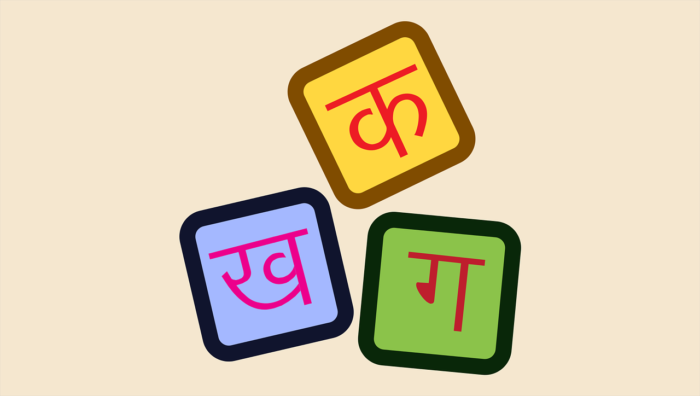
Why should people learn Hindi

Why should people learn Hindi

I have heard many people saying, “learning Hindi is very hard.”

However, interestingly enough, these people have little experience in this language or have given up in their attempts to command it with certain level of proficiency. 


Hindi is currently spoken by more than 500 million people and this number is progressively growing. The economy of India is becoming noticeable robust at a fast pace similar to China a few years ago. This fact creates superb opportunities for business, education and overall relationships.

By learning Hindi we will be able to learn other languages such as Punjabi, Marathi Gujarati, Bengali and Urdu. In fact, Urdu and Hindi are mutually intelligible at a spoken level which means you would be learning another language by learning Hindi.

Hindi is very similar to other languages, including Asian languages as well as European languages such as English, Spanish, French in terms of writing from left to right and for specially with Romance languages, most words are written in the same way they are pronounced.

In addition, Hindi uses genders for nouns that have to be in concordance with adjectives and verbs.

The script in Hindi is completely phonetic which means once you have learned it you will be able to read anything. Hindi has also very few irregular verbs which makes the conjugation process much easier in contrast with other languages.


Some similarities of Hindi with English and Spanish:


English


Bangle: from bāngṛī

Dungaree: from ḍūṅgrī

Guru: from guru

Jungle: from jangal

Karma: from karm

Pyjamas: from paijaamaa

Shampoo: from shaimpoo


Spanish


Naranja: from naarangee

¿Qué hubo?: from kya huva?

Mesa: from mez

Camisa: from kameez

Armario: from alamaaree

Dos: from do

Diez: from das


Bottom line


When somebody tells you learning Hindi is a dantesque and impossible task, just thank them but ignore that remark since this is not true.


If you have some experiences or opinions on this regard, please share them on the comments below, so we can all learn from each other.


  • Why are you learning Hindi?
  • Have you been able to learn another language spoken in India?
  • How similar are Hindi and Urdu?
  • Do you foresee Hindi as a lingua franca in the near future?
  • Will Hindi become a predominant language on the Internet?

Chinese people don’t greet because they are polite

Chinese people don’t greet because they are polite

Culture, habits, manners, preferences, are different and should be different from places to places; that way, we would have plenty of options to adopt the ones that resonate most on us.

I come from a culture where greetings became part of my quotidianess since a very young age. I clearly remember, maybe at 5 years old, when my first teacher insisted every morning that we should greet whenever we enter a classroom or any building, or when meeting a person.

The punishment for those who forgot to greet was simple: Standing for 5 minutes on a corner and repeating, “I must greet every day”.

Fortunately, I never had to go to a corner. For me, obeying rules was something that came spontaneously and progressively became second nature. I was afraid of being scolded or rebuked even in a slight way.

That trait, habit or rooted manner of my behavior was deeply affected when I first came to China.


I remember when I entered in a classroom and said, “good morning!”, few students opened their mouths to at least make a sort of noise. I thought they didn’t hear properly, so I repeated it. The improvement was notorious but still there were some who looked at me without saying a single word.

“That’s because it’s their first time to see a foreigner and they may be intimidated”, I thought.

The next day in an elevator, there was only a man and I said, “Ni hao”. The man remained looking at the ground and made feel as if I didn’t exist. That situation was starting to worry me, so I retried and said again “Ni hao”, and this man shamelessly looked at me and said “nothing”.

My reasoning was:

  • Perhaps he didn’t understand my two-word Chinese greeting
  • Maybe he had hearing impairment
  • There was a chance he had a bad day
  • He was scared of me
  • He didn’t want to talk
  • We wasn’t used to greeting

I forgot that incident and continued with my activities.

However, a few days later, I was looking for an address and greeted a middle-age lady to get some help. When she heard my favorite Chinese, word pronounced with the highest level of correctness, ‘Ni hao’, she cast a glance at me and quickly turned around and disappeared at light speed.

Well, “there must be something wrong with me”, was my conclusion.


 So, after talking to some Chinese friends, I found out the answer. Chinese people don’t greet as foreign people usually do. They ask other kind of questions when meeting a stranger or when getting together with friends. The most of common greeting among Chinese friends is “Ni Chi fan le ma?” or the shortest version “Ni Chie le ma?”

Wow! That’s was a very helpful piece of information since I was about to get an incurable severe trauma!

Through time, I was getting used to this habit. I mean, I started to accept with patience that people kept silent when I greeted them; however, I did not, and I will never stop expressing others a sort of joyful salutation.

When traveling to other countries, especially in North America, I realized this type of behavior of not greeting was not exclusive to many Chinese people.  This “reaction” is wide-spread all over the world. That forced me to research about the reasons a bit deeper.

Two common denominators I found for people to greet or not, were the personality and the level of education. All extroverted Chinese people with any kind of higher education were always “ready” to warmly respond to greetings.  

Some may think, but Chinese people are shy, humble and not much prone to show their emotions freely. That’s an accurate statement but not for new generations who are assimilating foreign cultural habits and progressively adopting many of them.

Another aspect that I noticed was that only the starting point was hard (as in many things in life), because after I was able to break the ice, I was inundated by kindness and stupendous treatment that Chinese people gave me, and consequently, that transformed my stay in China in a memorable and formidable experience. 

Bottom line


If you have some experiences or opinions on this regard, please share them on the comments below, so we can all learn from each other.


  • Do you usually greet strangers?
  • Why do some people greet, and some others don’t?
  • Have you experienced a ‘non-greeting trend’ in certain countries?
  • What can you lose if you greet or if you don’t greet?
  • Is greeting a good trait or something meaningless?

Why should people learn French

Why should people learn French

People should learn French because it is a language that can give you a sense of understanding of the greatest contributions that French culture has provided the world with.


As it is understood, every language gives a genuine perspective of the world that no matter how accurate the translations can be, it will never be fully enjoyable and meaningful if it is not grasped by the codes of the language in which these emotions, and events were born in. 


A clear example of what has been previously stated is this wonderful written masterpiece called, “Le comte de Monte-cristo” by Alexandre Dumas, in which the author records the different obstacles that an innocent man must overcome due to an unjust imprisonment which left him with a series of moral dilemmas ranging from hope, vengeance, compassion and clemency. 


Besides its literacy, historical, or revolutionary contributions as reasons to learn French, it’s a beautiful language with a unique stylish way of pronunciation.


It’s spoken in Europe, the Americas and Africa as the first language of several nations and it’s a major language of the UN and other important organizations around the world.


In addition, the learning process is much easier for those who already know any of the Romance languages or plan to learn it.


Uses of SER

Uses of SER


The verb “ser” corresponds to the English verb “to be”. Some of the most common uses are:


  1. To describe people or things.

  • Yo soy David (I’m David)
  • María es hermosa (Maria is beautiful)
  • Los gatos son blancos (The cats are white)
  • Esa silla es muy pequeña (That chair is very small)


  1. With nationalities or origin.

  • Ella es coreana (She is Korean)
  • Soy de Bogotá (I am from Bogota)
  • Son cervezas de Alemania (They are German beers)


  1. With religions

  • Ella no es católica (She is not Catholic)
  • Mi amigo es musulmán (My friend is Muslim)


  1. With occupations or professions

  • Arturo es profesor de química (Arthur is a teacher of Chemistry)
  • Soy vendedor de seguros (I am an insurance seller)
  • Somos estudiantes de idiomas (We are language students)


  1. With dates and time

  • La reunión es a las 5 p. m. (The meeting is at 5 p.m.)
  • Hoy es miércoles (Today is Wednesday)
  • El cumpleaños de Susana será el 15 de mayo (Susana’s birthday will be in May 15th)


  1. With materials that things are made of

  • La camisa blanca es de seda (The white shirt is made of silk.)
  • La cadena es de oro puro (The chain is made of pure gold.)


  1. With relationships

  • Ella es mi madre (She is my mother)
  • Carlos es mi jefe (Charles is my boss)
  • Pedro y felipe son hermanos (Peter and Philip are brothers)
  • Andrea fue mi mejor amiga (Andrea was my best friend)


  1. With locations but ONLY of events

  • La boda fue en la catedral central (The wedding was held at the Central Cathedral)
  • La conferencia será en el centro de convenciones (The conference will be at the Convention Center)


  1. To indicate possession

  • El auto blanco es mío (The white car is mine)
  • Esas joyas son de mi esposa (Those jewels are my wife’s)


  1. When “ser” and “estar” are correctly possible, “ser” must be used to indicate something permanent and “estar” to indicate something temporary. (Note: This rule is applicable only when both verbs are possible).


  • Soy feliz (I am happy) It implies a permanent or mostly state of happiness. Ex. Soy una persona feliz (I am a happy person)
  • Estoy feliz (I am happy) It implies a temporary state of happiness. Ex. Estoy feliz hoy (I am happy today)
  • Ella es muy irritable (She is irritable) (Almost always)
  • Ella está muy irritable (She is very irritable) (at this moment)


Get the book about Spanish DELE Exam - Level A1!


Get it now!

(See Table of Content)


Get the book about Spanish DELE Exam - Level A2!


Get it now!

(See Table of Content)


Get the book about Spanish DELE Exam - Level B1!


Get it now!

(See Table of Content)


Get the book about Spanish DELE Exam - Level B2!


Get it now!

(See Table of Content)


Get the book about Spanish DELE Exam - Level C1!


Get it now!

(See Table of Content)


Get the book about Spanish DELE Exam - Level C2!


Get it now!

(See Table of Content)


Get the book about China!


Get it now!

(See Table of Content)


Get the book about China!

(Spanish Edition)


Get it now!

(See Table of Content)


Get the book about All Prepositions in Spanish!

Get it now!

(See Table of Content)


Get the book about 1100 English-Spanish Cognates!

Bonus:  Audio pronunciations

Get it now!

(See Table of Content)


error: Content is protected !!